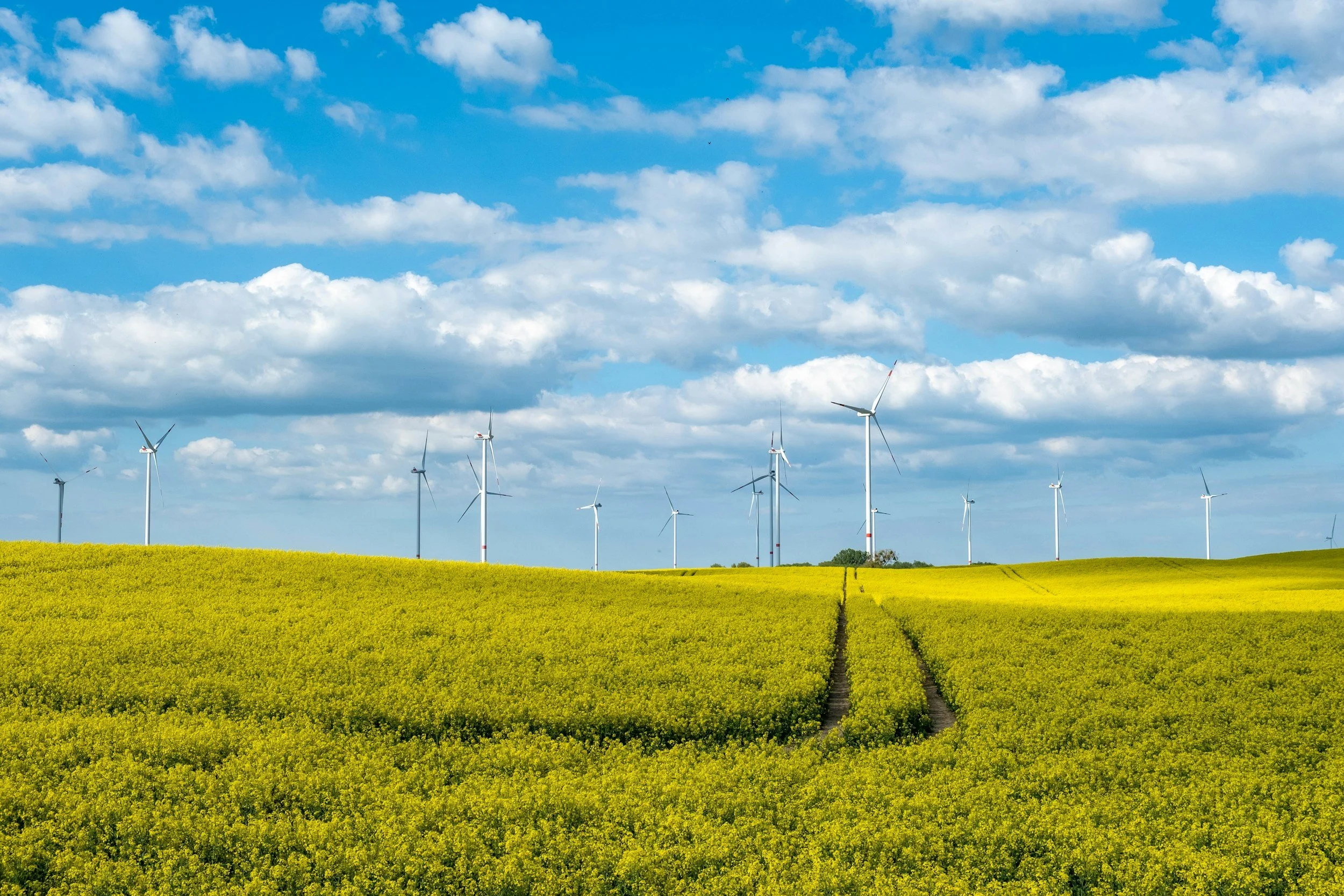
The Energy Future
Fortuna funds the power infrastructure behind the digital economy — at the moment it's needed most.
Note: This page cites third-party research (IEA, Goldman Sachs, CBRE, and others). Keep the source attributions when publishing — they add credibility and protect against "where did that figure come from" questions. Figures are 2025–2026 projections and should be refreshed periodically.
Our role
The data center era represents the largest energy infrastructure opportunity of our generation. Its success depends on one thing above all: capital reaching construction-ready projects at the right moment. That is exactly what Fortuna does.
Across North America, a vast pipeline of energy projects sits in the most difficult phase of its life — permitted, planned, and technically sound, but not yet financed for construction. This is the gap between approval and groundbreaking, and it is where promising projects most often stall. Developers have done the hard work of securing approvals, advancing interconnection, and lining up offtake, yet still need the equity to break ground. Fortuna exists to close that gap. By deploying capital into late-stage development and ready-to-build projects, we turn the power the digital economy needs from planned into built.
We fund the full mix the moment demands. Renewable energy and battery storage provide clean, firmed capacity for the long term. Natural gas delivers the reliable, fast-to-deploy generation the market needs right now. And the broader power infrastructure connects it all to the data centers driving demand. We don't bet on a single technology — we back the projects that meet real power needs, with the discipline to know which are genuinely ready to build.
What sets us apart is that we bring more than capital. Our backing from institutional banking partners gives our projects funding strength and certainty, while our procurement relationships and execution experience help sponsors move from financing to operation. In a market where the binding constraint is no longer demand or capital appetite but the ability to get real projects built on time, that combination — disciplined equity, institutional backing, and execution support — is precisely what turns opportunity into operating assets.
The case for this focus is overwhelming, and it is supported by the most credible analysis in the industry.
A step change in demand
The world's appetite for computing power is reshaping the global energy landscape. The scale of the shift is without modern precedent.
The International Energy Agency projects that global electricity demand from data centers will more than double to around 945 terawatt-hours by 2030 — a quantity of power equivalent to the entire current electricity consumption of Japan. For perspective, the sector consumed roughly 415 TWh in 2024, about 1.5% of global power consumption, after growing at an annual rate of about 12% over the preceding five years. Looking ahead, data center electricity consumption is projected to grow at roughly 15% per year through 2030 — more than four times faster than electricity demand from all other sectors combined.
The driver is artificial intelligence specifically. The electricity used by AI-accelerated servers is projected to grow by about 30% annually, far outpacing the roughly 9% growth of conventional servers. Goldman Sachs Research forecasts that global data center power demand will rise by as much as 165% by the end of the decade compared with 2023 levels — and other major analysts agree on the trajectory. Gartner estimates worldwide data center electricity consumption will climb from 448 TWh in 2025 to 980 TWh by 2030, while Deloitte projects a rise to over 1,000 TWh by 2030.
These are not isolated forecasts. A clear consensus among the world's leading analytical bodies points to a doubling or more of data center power demand within this decade.
North America at the center
Nowhere is this transformation more concentrated than in North America — the market Fortuna focuses on.
The United States was the world's largest data center market in 2024, accounting for approximately 45% of global data center electricity consumption. The IEA estimates that U.S. data center energy demand will increase by roughly 130% by 2030. The U.S. Department of Energy's Lawrence Berkeley National Laboratory found that data centers consumed about 4.4% of total U.S. electricity in 2023, with that share projected to reach between 6.7% and 12% by 2028.
The absolute scale is difficult to overstate. By 2030, U.S. data centers are expected to consume more electricity than all energy-intensive manufacturing combined — including aluminum, steel, cement, and chemicals production — and will drive almost half of all U.S. electricity demand growth over the period. Together, the United States and China are expected to represent nearly 80% of projected global growth in data center power demand.
This is precisely the market where new, reliable power infrastructure is most urgently needed — and precisely where Fortuna invests.
The bottleneck: demand has outrun the grid
Surging demand has collided with a hard constraint. The infrastructure required to deliver power is not being built quickly enough, and the gap between the two is now the defining challenge of the sector.
The grid itself requires enormous investment to keep pace. Goldman Sachs Research estimates that roughly $720 billion of grid spending may be needed through 2030, and cautions that transmission projects can take several years to permit and several more to build — creating a potential bottleneck for data center growth if regions are not proactive given the long lead times. The IEA echoes this directly, warning that unless significant investment is made in transmission infrastructure, up to 20% of planned data center projects could be at risk of delays.
The constraint shows up most visibly in interconnection queues. Industry guidance now describes U.S. interconnection delays stretching to five or more years, and a 2026 Bloom Energy survey of hyperscalers, colocation providers, utilities, and independent power producers found that "time-to-power" now runs roughly 1.5 to 2 years longer than previously expected. In major hubs the strain is already visible: CBRE reported that established markets such as Northern Virginia and Dallas-Fort Worth saw declines in under-construction capacity, citing power procurement challenges among the obstacles.
The bottleneck, in other words, is not ambition or capital appetite — it is getting real, viable projects financed and built, on time. That is the gap Fortuna exists to close.
Why the full energy mix
Meeting demand at this pace and scale requires every available source of reliable power. This is the strategic logic behind Fortuna's multi-technology focus.
The IEA's analysis finds that renewables and natural gas are together positioned to meet most of the rising power demand, given their cost-competitiveness in key markets, and industry voices consistently stress that a diverse range of energy sources will be required to meet data centers' growing needs. In practice, the market is converging on exactly the mix Fortuna funds.
Renewables and storage form the long-term backbone. Many hyperscalers and colocation providers have made public commitments to 100% renewable energy or 24/7 carbon-free energy, driving sustained demand for solar, wind, and the battery storage that firms intermittent generation into reliable supply.
Natural gas has emerged as the critical bridge. Facing multi-year waits for grid connection, many data centers are moving "behind the meter" — building dedicated on-site generation to energize faster. Natural gas can be deployed in a fraction of the time required for grid interconnection or for longer-horizon options such as small modular nuclear reactors, which industry figures place seven to twelve years out. The market increasingly frames gas explicitly as a bridge to the grid rather than a permanent solution — a pragmatic, near-term answer that keeps projects moving while cleaner capacity and transmission catch up.
Battery storage increasingly pairs with both. Real projects now combine these technologies directly: recent 2025 hyperscaler power agreements have deployed hybrid systems that integrate battery energy storage with natural gas generation, and large behind-the-meter projects are combining gas combined-cycle turbines with battery storage and grid backup. This is the firmed, hybrid, all-of-the-above reality of powering modern compute.
Fortuna does not bet on a single technology. We fund the mix the moment requires — renewable energy, battery storage, and natural gas — and we deploy capital at the stage where it matters most: turning approved, construction-ready projects into operating assets.
Fortuna's place in the picture
Every credible forecast points to the same conclusion: the digital economy will require an extraordinary buildout of new power infrastructure across North America, and the principal obstacle is no longer demand, technology, or capital appetite — it is execution. The challenge of this decade is financing and building real projects fast enough to matter.
Fortuna is built for exactly that challenge. We occupy a specific and critical position in the value chain: the point where a permitted, technically sound project needs equity to reach construction. It is the stage most capital avoids — too late for early developers, too early for the institutions that buy operating assets — and it is precisely where the energy transition either accelerates or stalls. By concentrating here, we direct capital to where it has the greatest effect on whether power actually gets built.
Our approach is designed for this moment. We deploy equity at the late-development and ready-to-build stage, where projects are substantially de-risked but still capital-constrained. We underwrite with rigor, requiring independent engineering and credit verification before we commit, so that the projects we back are genuinely ready to deliver. We are backed by institutional capital that gives our projects funding strength and certainty. And we bring procurement relationships and execution experience that help sponsors carry projects through construction to operation — support that is available without ever taking a project out of its owner's hands.
This is how the power behind the AI era gets built: not through capital alone, but through disciplined capital meeting credible projects at the right moment, with the backing and expertise to see them through. The opportunity is generational. The need is immediate. And the gap between approval and construction — the gap Fortuna was created to close — is where the future of energy will be decided.
Sources
International Energy Agency, Energy and AI (2025) — global data center demand doubling to ~945 TWh by 2030; ~15% annual growth; 2024 baseline of ~415 TWh; transmission/delay risk.
Goldman Sachs Research — up to 165% growth in data center power demand by 2030; ~$720B grid spending need through 2030.
Gartner (2025) — worldwide data center consumption rising from 448 TWh (2025) to 980 TWh (2030).
Brookings Institution (2026) — U.S. share of global consumption (~45% in 2024); ~130% U.S. demand growth by 2030; Deloitte projection (~1,065 TWh by 2030).
U.S. DOE / Lawrence Berkeley National Laboratory (2024) — U.S. data centers at 4.4% of electricity (2023), rising to 6.7–12% by 2028.
S&P Global / IEA (2025) — U.S. data centers to exceed energy-intensive manufacturing; renewables and gas to meet most rising demand.
CBRE North American Data Center Trends (2025) — under-construction declines in Northern Virginia and Dallas-Fort Worth.
Bloom Energy data center survey (2026) — time-to-power 1.5–2 years longer than expected.
Orrick, Megawatts to Megabytes (2025) — U.S. demand growth and 5+ year interconnection delays.
datacenterHawk / Natural Gas Intelligence / Marketplace (2025–2026) — behind-the-meter natural gas as a "bridge to the grid"; SMR timelines.
SEC filings: Essential Utilities (944 MW behind-the-meter gas CCGT + battery storage data center project); ProPetro/PROPWR (60 MW hybrid BESS + natural gas hyperscaler contract) — real-world hybrid deployments.